🛈 If you buy through our links, Amazon pays us a small commission at no extra cost to you. That is how we fund these guides. How we choose.
📑 Table of contents
Dehumidifiers have a reputation for being power hogs, and a big basement unit running all summer does show up on the bill. But how much exactly? Plug in your model's wattage, your hours of use and your electricity rate below to see the real cost per day, per month and per season. Then check our tables and tips to keep that number down.
Dehumidifier electricity cost calculator
Per day
—
Per month
—
Humid season (5 months)
—
$0.17/kWh is only an example close to the recent US residential average; rates range from about 11 cents in some states to over 30 cents in California, New England and Hawaii. Use the rate on your bill. Wattage is the rated power; with a humidistat the unit rests part of the time, so real use is lower.
Typical electricity use by type
Typical wattages on the market and approximate costs at 8 hours a day, 30 days and $0.17/kWh. Always check your model's spec sheet.
| Type | Typical watts | kWh/month (8 h/day) | Cost/month approx. |
|---|---|---|---|
| Mini thermoelectric | 20–50 W | 5–12 kWh | $0.80–2 |
| Compact compressor | 200–300 W | 48–72 kWh | $8–12 |
| 35-pint | 350–500 W | 84–120 kWh | $14–20 |
| 50-pint | 450–700 W | 108–168 kWh | $18–29 |
| Desiccant | 500–800 W | 120–192 kWh | $20–33 |
| Moisture absorbers | 0 W | 0 kWh | Refills only |
Watch out: what matters is not just watts per hour but pints removed per kWh. A mini unit uses very little power but removes so little water that it will never dry a whole room. To check what capacity you need, use our dehumidifier size calculator.
Energy-smart picks
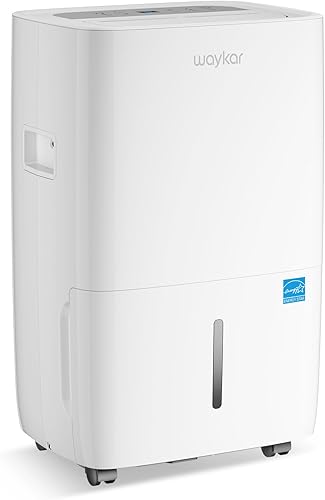
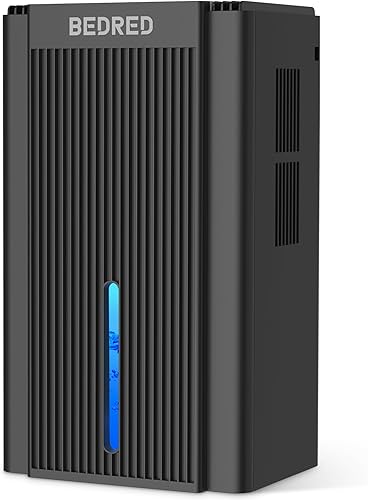


How to calculate it by hand
- Find the wattage on the label or spec sheet (W).
- Convert to kilowatts: divide by 1,000 (550 W = 0.55 kW).
- Multiply by hours per day: 0.55 kW × 8 h = 4.4 kWh.
- Multiply by your rate: 4.4 × $0.17 = about $0.75 per day.
- Multiply by days: $0.75 × 30 = about $22 per month.
If your utility has time-of-use rates, running the dehumidifier overnight or outside peak hours can cut the cost noticeably.
Real-world examples
All at the example rate of $0.17/kWh. Swap in your own rate in the calculator.
Mini unit in a closet, 24/7
About 35 W × 24 h = 0.84 kWh a day, roughly 25 kWh a month: about $4 a month. One of the cheapest appliances in your home.
Compact unit in the bedroom, 8 hours a night
About 250 W × 8 h = 2 kWh a day, 60 kWh a month: about $10 a month.
50-pint unit in the basement, all summer
About 550 W. With the humidistat, the compressor typically runs 8–12 hours a day in a damp basement: 4.4–6.6 kWh a day, roughly $22–34 a month and $110–170 for a five-month season.
Drying laundry twice a week
A compressor unit for 5 hours per load, 8 loads a month: around 20 kWh, roughly $3–4 a month, usually less than an electric dryer for the same loads.
How it compares with other appliances
| Appliance | Typical watts |
|---|---|
| LED light bulb | 8–10 W |
| Mini dehumidifier | 20–50 W |
| Refrigerator (while running) | 100–250 W |
| 50-pint dehumidifier | 450–700 W |
| Window air conditioner | 500–1,400 W |
| Space heater | 1,500 W |
| Electric clothes dryer | 2,000–5,000 W |
A big dehumidifier sits in the same league as a small window AC. It is not trivial, but it is far from the biggest load in your home, and it protects things that cost much more to replace.
What Energy Star means for a dehumidifier
Energy Star rates dehumidifiers by their Integrated Energy Factor (IEF), measured in liters of water removed per kWh. The higher the number, the less electricity each pint costs you. Certified models must beat the federal minimum by a meaningful margin, and the gap matters most for units that run many hours every summer, like basement dehumidifiers. Many utilities offer rebates or recycling bonuses on certified units, so check your provider's website before you buy. If your old dehumidifier is more than ten years old, a new certified unit can pay back part of its price in lower bills over a few seasons.
7 ways to lower the cost
- Set it to 45–50%, not 35%. Every extra point costs more and dries out the air.
- Close doors and windows in the space you are drying.
- Clean the filter every 2–4 weeks.
- Choose Energy Star when buying and check for utility rebates.
- Size it right: an undersized unit runs nonstop without ever reaching the target.
- Fix moisture sources: gutters, downspouts, dryer vents and bathroom fans.
- Use a hygrometer to confirm you need it running. Our picks: best indoor hygrometers.
Pick an efficient dehumidifier
Compare the best dehumidifiers by capacity, noise and energy use, from mini units to 50-pint basement models.
See the best dehumidifiers →Frequently asked questions
How many watts does a dehumidifier use?
Mini thermoelectric units draw about 20–50 W. Compact compressor units around 200–300 W, 35-pint models roughly 350–500 W and 50-pint models roughly 450–700 W. Check the label or spec sheet of your model for the exact figure.
Does a dehumidifier use a lot of electricity?
A 50-pint unit uses about as much as a window air conditioner while the compressor is running. Running 8 hours a day at 17 cents per kWh, that is roughly $18–29 a month. Mini units cost a few dollars a month.
Is it cheaper to run a dehumidifier or an AC?
For removing moisture alone, a dehumidifier is usually cheaper than cranking the AC, which cools the air too. In hot, humid summers the AC already removes some moisture; a dehumidifier helps in basements and in mild, muggy weather when the AC does not run much.
Do Energy Star dehumidifiers save money?
Yes. Energy Star certified models remove more water per kWh than standard ones. Over a long humid season in a basement, that difference adds up, and some utilities offer rebates on certified units.
How can I lower my dehumidifier’s electricity cost?
Set humidity to 45–50% instead of lower, keep doors and windows closed, clean the filter regularly, size the unit correctly and fix moisture sources like leaky gutters or a dryer vented indoors.
📚 Sources and references
Official agencies for more information on humidity, mold and indoor air quality.
- A Brief Guide to Mold, Moisture, and Your Home — U.S. Environmental Protection Agency (EPA)
- Mold — U.S. Environmental Protection Agency (EPA)
- WHO guidelines for indoor air quality: dampness and mould — World Health Organization (WHO)
- Dehumidifiers — ENERGY STAR