🛈 If you buy through our links, Amazon pays us a small commission at no extra cost to you. That is how we fund these guides. How we choose.
📑 Table of contents
A musty basement, windows dripping every morning, towels that never dry, a hygrometer stuck above 60%: all signs your home holds more water than it should. The right dehumidifier fixes that in days, while the wrong one hums away for months without making a dent. We compared the best-selling dehumidifiers on Amazon.com by pints per day, coverage, noise and running cost so you can pick the right one in five minutes.
⚡ Quick summary: our top picks
Stock checkedThe best dehumidifiers of 2026
Ranked by how well they match real-world needs, their specs and what thousands of buyers report. Only models with verified stock on Amazon.com are shown; if one sells out, the next one moves up.
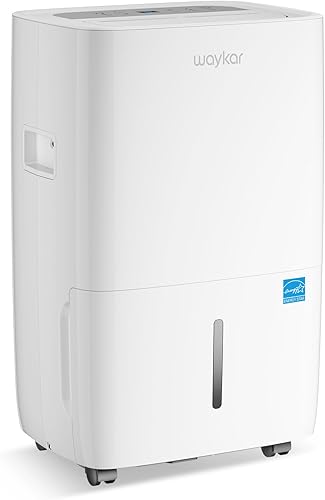
Waykar 80-Pint Energy Star Dehumidifier
Best for basements and large homes
- Up to 80 pints/day
- Covers up to 5,000 sq ft
- Energy Star certified
- Continuous drain option
Our verdict, pros and cons
One of the best-selling basement dehumidifiers on Amazon, rated for spaces up to 5,000 sq ft and Energy Star certified.
- + Huge capacity
- + Thousands of positive reviews
- – Bulky for small rooms

AEOCKY 50-Pint Ultra-Quiet Dehumidifier with Drain Hose
Best for quiet whole-floor drying
- 50 pints/day
- Up to 3,500 sq ft
- Drain hose included
- Around 40 dB
Our verdict, pros and cons
A 50-pint compressor model rated around 40 dB, with a drain hose for continuous operation.
- + Quiet for its capacity
- + Hands-free draining
- – Less known brand

50-Pint Basement Dehumidifier with Drain Hose and 1.7 gal Tank
Best for damp basements on a budget
- 50 pints/day
- 1.7 gal tank
- Drain hose
- Up to 4,500 sq ft
Our verdict, pros and cons
A popular 50-pint unit with a 1.7-gallon tank and a drain hose for basements up to 4,500 sq ft.
- + Large tank
- + Good value
- – Generic brand
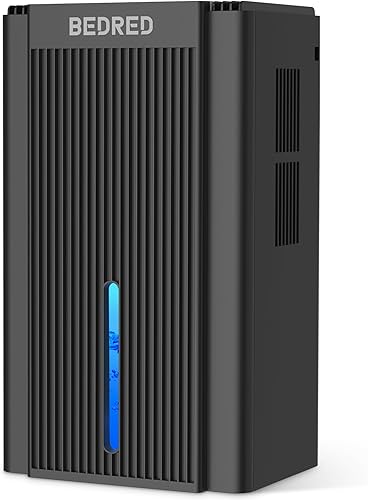
BEDRED 95 oz Dehumidifier for Home
Best for bedrooms and bathrooms
- 95 oz tank
- Auto shut-off
- Sleep mode
- Compact size
Our verdict, pros and cons
A compact best seller with a 95 oz tank, auto shut-off and a quiet sleep mode.
- + Quiet
- + Affordable
- – Not for basements

ToLife Dehumidifier with 95 oz Tank and Sleep Mode
Best for small apartments
- 95 oz tank
- Sleep mode
- Auto shut-off
Our verdict, pros and cons
Compact dehumidifier with a 95 oz tank, sleep mode and auto shut-off.
- + Easy to use
- + Quiet at night
- – Limited capacity

SANVINDER 25 oz Mini Dehumidifier
Best for closets and small bedrooms
- 25 oz tank
- Ultra quiet
- Auto-off when full
Our verdict, pros and cons
A tiny, ultra-quiet thermoelectric dehumidifier for closets, RVs and small bedrooms.
- + Very quiet
- + Low energy use
- – Small capacity

Eva-Dry E-333 Renewable Wireless Mini Dehumidifier
Best for closets, safes and cabinets
- No cord while in use
- Color indicator
- Recharges overnight
- Lasts years
Our verdict, pros and cons
A cordless silica-gel dehumidifier: when the indicator turns pink, plug it in overnight to recharge. A classic with tens of thousands of reviews.
- + Reusable
- + Silent
- – Small capacity

DampRid Fragrance Free Hanging Moisture Absorber (3 pack)
Best for closets: the best seller
- 3 hanging bags
- Fragrance free
- No electricity
Our verdict, pros and cons
America's best-known moisture absorber: hang it in the closet and it traps water in the bottom pouch.
- + Very effective in closets
- + Zero maintenance
- – Disposable
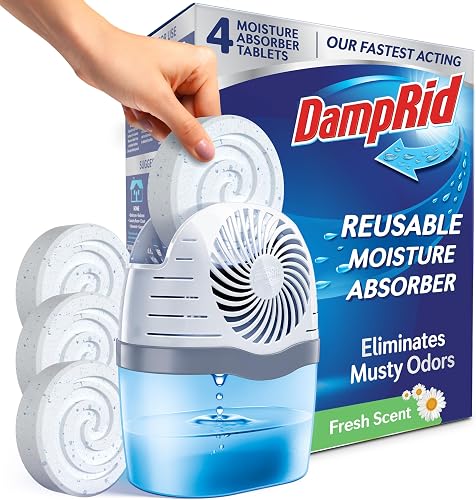
DampRid Refillable Moisture Absorber with 4 Tablets
Best for bathrooms and laundry rooms
- 4 drop-in tablets
- Refillable
- No electricity
Our verdict, pros and cons
A refillable tub with drop-in tablets that trap moisture and odors.
- + Cheap refills
- – Needs emptying
Side-by-side comparison
| Product | Type | Capacity | Room size | Score | Buy |
|---|---|---|---|---|---|
| ⭐ Our top pick Waykar 80 Pint | Compressor | 80 pints/day | up to 5,000 sq ft | 8.9 | Check price |
| AEOCKY 50 Pint | Compressor | 50 pints/day | up to 3,500 sq ft | 8.7 | Check price |
| 50 Pint with drain hose | Compressor | 50 pints/day | — | 8.4 | Check price |
| BEDRED 95 oz | Compact | — | — | 8.4 | Check price |
| ToLife 95 oz | Compact | — | — | 8.3 | Check price |
| SANVINDER mini | Mini (Peltier) | — | — | 8.3 | Check price |
| Eva-Dry E-333 | Renewable silica | — | — | 8.6 | Check price |
| DampRid Hanging (3) | Hanging bag | — | — | 9.0 | Check price |
| DampRid Refillable | Refillable tub | — | — | 8.6 | Check price |
Big compressor models are rated in pints per day; compact and mini units are usually listed by tank size, because they pull far less water. Do not compare a 95 oz tank with a 50-pint rating: they are different leagues.
The best dehumidifier for your situation
| Where | What to buy |
|---|---|
| Basement or crawl space | 50-pint compressor with drain hose, Energy Star |
| Whole floor, 1,500+ sq ft | 50-pint unit, or two units in different zones |
| Bedroom or living room | Compact unit with sleep mode, or a 20–35 pint model |
| Bathroom without a window | An exhaust fan first; a compact unit as backup |
| Closet, RV, boat or gun safe | Mini thermoelectric or cordless rechargeable |
| No outlet nearby | Hanging moisture absorbers or silica gel |
Detailed picks for each space: basements, bedrooms, closets and garages.
Compressor, thermoelectric or desiccant?
Compressor: the one that really dries a space
It works like a small air conditioner: a cold coil condenses the moisture and drips it into the bucket. It is the most efficient way to remove a lot of water, which is why nearly every 35- and 50-pint unit sold in the US is a compressor model. The trade-off: it weighs 35–45 lb, makes a steady fan-and-fridge hum and loses capacity below about 60 °F (15 °C).
Thermoelectric (Peltier): small, quiet and cheap
No compressor, just a chip that gets cold on one side. They draw only 20–50 W and are nearly silent, but they pull a few ounces of water a day, not pints. Perfect for a closet, a small bathroom or an RV; useless for a basement.
Desiccant: the cold-weather specialist
An absorbent wheel or silica cartridge traps moisture, so it keeps working in cold garages, crawl spaces and boats where a compressor struggles. Cordless rechargeable units use the same principle on a tiny scale: they absorb for weeks and you plug them in overnight to dry them out.
How to choose a dehumidifier in 5 steps
- Measure first. A cheap hygrometer tells you whether you are at 55% (fine) or 75% (problem). Aim for 40–50% indoors. See our guide to ideal indoor humidity.
- Size it by square footage and dampness. Check the current pint rating, not old marketing numbers.
- Plan the drainage. If it will run all summer in a basement, a drain hose to a floor drain or sump saves you from emptying a bucket twice a day. Some units add a pump to push water up into a sink or out a window.
- Check the noise. In a bedroom, look for a sleep mode, a dimmable display and a published dB rating.
- Look for Energy Star. Certified units remove more water per kWh, which adds up over a long, humid summer.
What it really costs to run
With the US average residential rate of roughly 16–18 cents per kWh, a 50-pint unit running 8 hours a day costs about the same as a window AC: $18–29 a month. A compact model is usually under $10, and a mini thermoelectric about $3 even running around the clock. Thanks to the humidistat, real costs tend to be lower than these estimates because the compressor rests once the target is reached. Run your own numbers with our dehumidifier electricity calculator.
Get more out of any dehumidifier
- Run it in a closed room or a closed-off basement so it is only drying the space you care about.
- Pair it with ventilation: run the bathroom fan during and 20 minutes after every shower.
- Keep it on a hard, level surface and empty or drain it before the tank fills.
- If you already have black spots on walls, clean them first: here is how to remove mold from walls.
On a tight budget? See our list of cheap dehumidifiers that actually work, or browse every guide in our dehumidifiers section.
Frequently asked questions
What size dehumidifier do I need?
Rough rule under the current DOE ratings: a mini unit for closets and small bathrooms, about 20–22 pints/day for a bedroom up to 500 sq ft, 35 pints for 500–1,500 sq ft and 50 pints for a damp basement or anything bigger. Size up one step if you see mold, wet walls or standing water. Our calculator gives you a number in 10 seconds.
Is it OK to run a dehumidifier all the time?
Yes. Modern units have a built-in humidistat: set the target to 45–50% and the compressor shuts off when the room gets there and kicks back on when humidity climbs. In a basement it is normal for it to run every day from late spring to early fall.
Is a 50-pint dehumidifier too big for one room?
Not really. A bigger unit reaches the target faster and then cycles off, so it does not necessarily use more electricity. The downsides are size, weight, noise and price. An undersized unit is the worse mistake: it runs nonstop and never gets the room dry.
Why did dehumidifier pint ratings drop in 2019?
The Department of Energy changed the test from 80 °F (27 °C) to 65 °F (18 °C), which is closer to a real basement. The same machine that used to be sold as a 70-pint unit is now labeled about 50 pints. Nothing got weaker; only the label changed.
Where should I put a dehumidifier?
In the dampest area, at least 6–12 inches from walls and furniture so air can flow around it, with doors and windows closed. In a basement, put it near the source of moisture and close to a floor drain or sump if you want continuous drainage.
How much does it cost to run a dehumidifier?
A 50-pint unit draws roughly 450–700 W. Running 8 hours a day at about 17 cents per kWh, that is around $18–29 a month. A mini thermoelectric unit costs about $3 a month even running 24/7. Energy Star models remove more water per kWh.
📚 Sources and references
Official agencies for more information on humidity, mold and indoor air quality.
- A Brief Guide to Mold, Moisture, and Your Home — U.S. Environmental Protection Agency (EPA)
- Mold — U.S. Environmental Protection Agency (EPA)
- WHO guidelines for indoor air quality: dampness and mould — World Health Organization (WHO)
- Dehumidifiers — ENERGY STAR