🛈 If you buy through our links, Amazon pays us a small commission at no extra cost to you. That is how we fund these guides. How we choose.
📑 Table of contents
Basements are the dampest place in most American homes: they sit below grade, the concrete walls stay cool and ground moisture wicks straight through them. The result is that familiar musty smell, rusty tools, warped boxes and, sooner or later, mold. A properly sized basement dehumidifier with a drain hose is the single most effective fix, and here are the ones worth buying.
⚡ Quick summary: our top picks
Stock checkedThe best basement dehumidifiers
Ranked by capacity, drainage options and buyer feedback on Amazon.com. All are 115 V US models with verified stock.
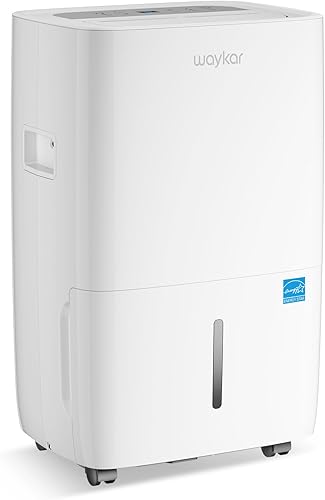
Waykar 80-Pint Energy Star Dehumidifier
Best for basements and large homes
- Up to 80 pints/day
- Covers up to 5,000 sq ft
- Energy Star certified
- Continuous drain option
Our verdict, pros and cons
One of the best-selling basement dehumidifiers on Amazon, rated for spaces up to 5,000 sq ft and Energy Star certified.
- + Huge capacity
- + Thousands of positive reviews
- – Bulky for small rooms

AEOCKY 50-Pint Ultra-Quiet Dehumidifier with Drain Hose
Best for quiet whole-floor drying
- 50 pints/day
- Up to 3,500 sq ft
- Drain hose included
- Around 40 dB
Our verdict, pros and cons
A 50-pint compressor model rated around 40 dB, with a drain hose for continuous operation.
- + Quiet for its capacity
- + Hands-free draining
- – Less known brand

50-Pint Basement Dehumidifier with Drain Hose and 1.7 gal Tank
Best for damp basements on a budget
- 50 pints/day
- 1.7 gal tank
- Drain hose
- Up to 4,500 sq ft
Our verdict, pros and cons
A popular 50-pint unit with a 1.7-gallon tank and a drain hose for basements up to 4,500 sq ft.
- + Large tank
- + Good value
- – Generic brand
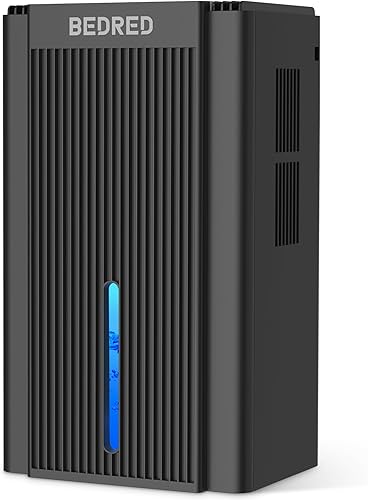
BEDRED 95 oz Dehumidifier for Home
Best for bedrooms and bathrooms
- 95 oz tank
- Auto shut-off
- Sleep mode
- Compact size
Our verdict, pros and cons
A compact best seller with a 95 oz tank, auto shut-off and a quiet sleep mode.
- + Quiet
- + Affordable
- – Not for basements

ToLife Dehumidifier with 95 oz Tank and Sleep Mode
Best for small apartments
- 95 oz tank
- Sleep mode
- Auto shut-off
Our verdict, pros and cons
Compact dehumidifier with a 95 oz tank, sleep mode and auto shut-off.
- + Easy to use
- + Quiet at night
- – Limited capacity

Eva-Dry E-333 Renewable Wireless Mini Dehumidifier
Best for closets, safes and cabinets
- No cord while in use
- Color indicator
- Recharges overnight
- Lasts years
Our verdict, pros and cons
A cordless silica-gel dehumidifier: when the indicator turns pink, plug it in overnight to recharge. A classic with tens of thousands of reviews.
- + Reusable
- + Silent
- – Small capacity
Quick comparison
| Product | Type | Capacity | Room size | Score | Buy |
|---|---|---|---|---|---|
| ⭐ Our top pick Waykar 80 Pint | Compressor | 80 pints/day | up to 5,000 sq ft | 8.9 | Check price |
| AEOCKY 50 Pint | Compressor | 50 pints/day | up to 3,500 sq ft | 8.7 | Check price |
| 50 Pint with drain hose | Compressor | 50 pints/day | — | 8.4 | Check price |
| BEDRED 95 oz | Compact | — | — | 8.4 | Check price |
| ToLife 95 oz | Compact | — | — | 8.3 | Check price |
| Eva-Dry E-333 | Renewable silica | — | — | 8.6 | Check price |
What size dehumidifier does your basement need?
Since 2019 manufacturers rate capacity at 65 °F (18 °C) instead of 80 °F (27 °C). That is why a unit once sold as "70 pints" now reads "50 pints". Use current ratings with this chart:
| Basement size | Musty only | Damp walls, wet spots | Seepage or standing water |
|---|---|---|---|
| Up to 500 sq ft | 22–35 pints | 35 pints | 50 pints |
| 500–1,000 sq ft | 35 pints | 50 pints | 50 pints |
| 1,000–1,500 sq ft | 35–50 pints | 50 pints | 50+ pints or two units |
| 1,500–2,500 sq ft | 50 pints | 50+ pints | Two units or whole-house system |
Want a precise number for your space? Our dehumidifier size calculator does it in seconds.
Compressor or desiccant: temperature decides
A compressor unit is the right choice for the vast majority of basements, especially finished ones and those that stay above 60 °F. In an unfinished basement in the Northeast or Midwest that drops into the 40s and 50s °F in winter, capacity falls sharply and the coil can frost up. Look for auto-defrost and a low operating temperature in the specs, or consider a desiccant model for spaces that stay cold. Crawl spaces usually call for a dedicated crawl-space dehumidifier, which is a different product category installed by a pro.
How to set it up so it actually works
- Close the space. Shut basement windows and the door upstairs. Otherwise you are drying the whole house and the outdoors.
- Center it. Place it in the open, 12 inches or more from walls, ideally near the dampest area.
- Set continuous drainage. Attach a garden hose to the drain outlet and run it downhill to a floor drain, laundry sink below the outlet or sump pit. If the water has to go up, use a model with a pump.
- Set 45–50%. Trust a separate hygrometer more than the built-in display, which is often a few points off.
- Clean the filter monthly during the humid season and check the hose for kinks.
Common basement mistakes
- Buying a small compact unit for a 1,000 sq ft basement: it will run nonstop and never catch up.
- Storing cardboard boxes directly on the concrete. Use plastic bins on shelves.
- Running the clothes dryer with a disconnected vent, or air-drying laundry without the dehumidifier on.
- Painting over mold. Clean it first: see how to remove mold from walls, then use mold-resistant paint.
Worried about the power bill? A 50-pint unit costs roughly $18–29 a month at 8 hours a day. Run your own numbers with our dehumidifier electricity calculator, or compare all sizes in our best dehumidifiers guide.
Frequently asked questions
What size dehumidifier do I need for my basement?
For most basements a 50-pint unit (under the current 2019 DOE rating) is the right call. Up to about 1,000 sq ft and only musty, a 35-pint can keep up; above 1,500 sq ft or with wet walls or seepage, go 50 pints or bigger, or use two units.
What humidity should a basement be?
Keep it between 45% and 50%, and never above 60% for long. Above 60% mold, dust mites and that musty smell take off; below 40% wastes energy for no benefit.
Should a basement dehumidifier run all the time?
Leave it on with the humidistat set to 45–50%. It will cycle on and off by itself. In humid summers it is normal for it to run many hours a day; in winter, with the heat on, it may barely run at all.
Can I drain a dehumidifier into a floor drain or sump pit?
Yes, that is the best setup. Connect a standard garden hose to the drain port and run it downhill to a floor drain or sump pit. If the drain is higher than the unit, you need a model with a built-in pump or a separate condensate pump.
Does a dehumidifier work in a cold basement?
Compressor units lose capacity below about 60 °F (15 °C) and may ice up below 41 °F (5 °C), although most have auto-defrost. In an unheated basement or crawl space that stays cold, a desiccant model or a crawl-space-rated unit works better.
Will a dehumidifier get rid of the musty smell?
Usually yes, within one to two weeks, because the smell comes from mold and mildew that thrive above 60% humidity. Clean any visible mold and wash fabrics too, or the odor can linger even after the air is dry.
📚 Sources and references
Official agencies for more information on humidity, mold and indoor air quality.
- A Brief Guide to Mold, Moisture, and Your Home — U.S. Environmental Protection Agency (EPA)
- Mold — U.S. Environmental Protection Agency (EPA)
- WHO guidelines for indoor air quality: dampness and mould — World Health Organization (WHO)
- Dehumidifiers — ENERGY STAR