🛈 If you buy through our links, Amazon pays us a small commission at no extra cost to you. That is how we fund these guides. How we choose.
📑 Table of contents
Air-drying laundry saves money and is gentler on your clothes, but indoors it has a catch: a full load releases several pints of water into the air. That moisture ends up on windows and walls, and clothes that take two days to dry come out smelling sour. A dehumidifier in the same room changes everything: laundry dries in hours, not days, and the room stays dry. Here are the best models for the job.
⚡ Quick summary: our top picks
Stock checkedThe best dehumidifiers and accessories for drying clothes
Chosen for capacity, airflow and continuous drainage, which matters when you dry several loads a week.

AEOCKY 50-Pint Ultra-Quiet Dehumidifier with Drain Hose
Best for quiet whole-floor drying
- 50 pints/day
- Up to 3,500 sq ft
- Drain hose included
- Around 40 dB
Our verdict, pros and cons
A 50-pint compressor model rated around 40 dB, with a drain hose for continuous operation.
- + Quiet for its capacity
- + Hands-free draining
- – Less known brand

50-Pint Basement Dehumidifier with Drain Hose and 1.7 gal Tank
Best for damp basements on a budget
- 50 pints/day
- 1.7 gal tank
- Drain hose
- Up to 4,500 sq ft
Our verdict, pros and cons
A popular 50-pint unit with a 1.7-gallon tank and a drain hose for basements up to 4,500 sq ft.
- + Large tank
- + Good value
- – Generic brand

SONGMICS 61.6-Inch Clothes Drying Rack
Best for drying laundry indoors with a dehumidifier
- 61.6 in tall
- 3 rotatable arms
- Foldable
Our verdict, pros and cons
A sturdy, foldable drying rack with rotatable arms. Pair it with a dehumidifier for the cheapest indoor drying.
- + Sturdy
- + Space saving
- – Not heated
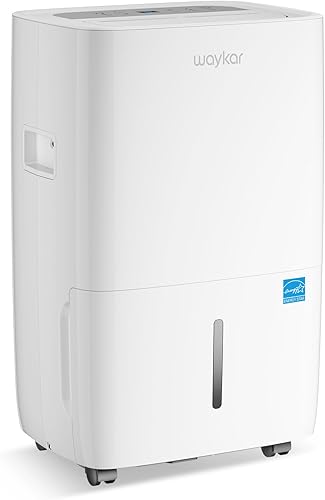
Waykar 80-Pint Energy Star Dehumidifier
Best for basements and large homes
- Up to 80 pints/day
- Covers up to 5,000 sq ft
- Energy Star certified
- Continuous drain option
Our verdict, pros and cons
One of the best-selling basement dehumidifiers on Amazon, rated for spaces up to 5,000 sq ft and Energy Star certified.
- + Huge capacity
- + Thousands of positive reviews
- – Bulky for small rooms
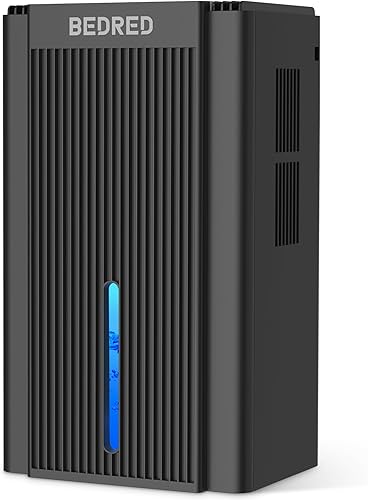
BEDRED 95 oz Dehumidifier for Home
Best for bedrooms and bathrooms
- 95 oz tank
- Auto shut-off
- Sleep mode
- Compact size
Our verdict, pros and cons
A compact best seller with a 95 oz tank, auto shut-off and a quiet sleep mode.
- + Quiet
- + Affordable
- – Not for basements

MOJOCO 600 W Portable Clothes Dryer
Best for apartments without a dryer
- 600 W
- Compact
- Portable
Our verdict, pros and cons
A compact 600 W portable dryer for small loads.
- + Fits small apartments
- – Small loads only
Quick comparison
| Product | Type | Capacity | Power | Score | Buy |
|---|---|---|---|---|---|
| ⭐ Our top pick AEOCKY 50 Pint | Compressor | 50 pints/day | — | 8.7 | Check price |
| 50 Pint with drain hose | Compressor | 50 pints/day | — | 8.4 | Check price |
| SONGMICS drying rack | Drying rack | — | — | 8.5 | Check price |
| Waykar 80 Pint | Compressor | 80 pints/day | — | 8.9 | Check price |
| BEDRED 95 oz | Compact | — | — | 8.4 | Check price |
| MOJOCO portable dryer | Portable dryer | — | 600 W | 8.0 | Check price |
How to dry laundry with a dehumidifier, step by step
- Spin hard. Use the highest spin speed your washer allows: every bit of water removed in the drum is water the dehumidifier does not have to pull.
- Pick a small room. A laundry room, bathroom or spare bedroom works best. Close the door and windows.
- Spread the load. Use a drying rack and leave space between items. Thick towels and jeans go on the outside.
- Aim the airflow. Place the dehumidifier 2–3 feet from the rack with the air outlet facing the clothes. Use laundry mode or continuous mode if available.
- Drain it. One load can fill a small bucket. Use a drain hose to a floor drain or utility sink if you can.
Dehumidifier vs. clothes dryer
| Dehumidifier + rack | Electric dryer | |
|---|---|---|
| Energy per load | About 1–3 kWh (4–6 hours) | About 2–4 kWh |
| Time | Several hours | About an hour |
| Gentle on fabric | Yes, no heat or tumbling | Can shrink and wear fabrics |
| Bonus | Dries the room too | Wrinkle-free if folded quickly |
Figures are approximate and depend on the model and load. Run your own numbers with our dehumidifier electricity calculator.
Best rooms to dry laundry in
- Laundry room: ideal, especially if there is a floor drain or utility sink for the hose.
- Bathroom: small, easy to close and tolerant of moisture. Keep the unit away from the tub and on a GFCI outlet.
- Spare bedroom: good if you can close it off; keep the rack away from the walls.
- Basement: works, but basements are already damp, so expect longer drying times and size the unit generously.
Avoid the bedroom you sleep in and open-plan living areas, where the moisture spreads before the dehumidifier can catch it.
What to look for
- Compressor, not mini. Thermoelectric units cannot keep up with wet laundry.
- High airflow. A strong fan does half the work.
- Laundry mode or continuous mode. Runs at full power regardless of the humidity setting.
- Drain hose option. Avoids emptying the tank mid-cycle.
- Wheels and handle. You will move it between rooms.
Extra tips for fresh-smelling laundry
- Hang laundry immediately after the wash ends.
- Shake each item out to open the fibers.
- Flip thick items halfway through.
- If laundry still smells sour, clean the washer gasket and run a hot cleaning cycle.
If drying clothes is making your whole home damp, read how to reduce humidity in a room and how to stop window condensation. To compare all models, see the best dehumidifiers of 2026.
Frequently asked questions
Does a dehumidifier really dry clothes?
Yes. Clothes dry by evaporation, and evaporation slows to a crawl when the air is already humid. A dehumidifier keeps the air dry so the water keeps leaving the fabric. With a decent unit in a small closed room, a load on a rack typically dries in several hours instead of a day or more.
Is a dehumidifier cheaper than a clothes dryer?
Usually, yes. A typical electric dryer uses roughly 2–4 kWh per load. A compact compressor dehumidifier running for 4–6 hours often uses less than that, and it also dries the room. The trade-off is time: the dryer is much faster.
What size dehumidifier do I need to dry clothes?
A compressor model is the way to go; mini thermoelectric units are too weak for a full load. A 35- to 50-pint unit in a small laundry room or bathroom works well. Bigger means faster drying.
Is it bad to dry clothes inside without a dehumidifier?
A full load can release several pints of water into your home. Without ventilation or a dehumidifier, that moisture ends up on windows and walls, and the clothes may smell sour because they dried too slowly.
📚 Sources and references
Official agencies for more information on humidity, mold and indoor air quality.
- A Brief Guide to Mold, Moisture, and Your Home — U.S. Environmental Protection Agency (EPA)
- Mold — U.S. Environmental Protection Agency (EPA)
- WHO guidelines for indoor air quality: dampness and mould — World Health Organization (WHO)
- Dehumidifiers — ENERGY STAR