🛈 If you buy through our links, Amazon pays us a small commission at no extra cost to you. That is how we fund these guides. How we choose.
📑 Table of contents
Silica gel is the quiet hero of moisture control: those little beads protect camera bags, tool chests, gun safes, stored seeds and important papers. Unlike disposable absorbers, indicating silica can be recharged hundreds of times, which makes it the cheapest long-term option for small enclosed spaces. Here are the best reusable packs and how to use them right.
⚡ Quick summary: our top picks
Stock checkedThe best reusable silica gel
Ranked by capacity, ease of recharging and versatility, all in stock on Amazon.com.
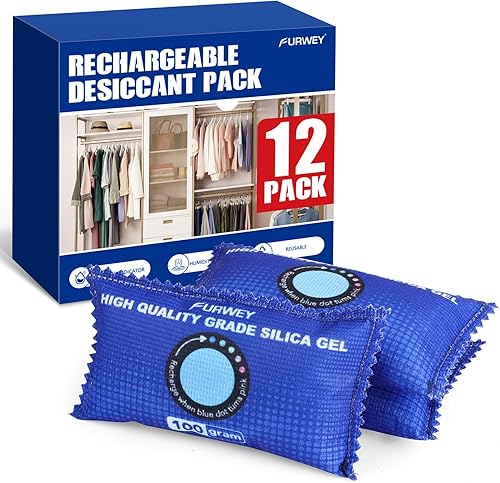
FURWEY Rechargeable Desiccant Packs 100 g (12 pack)
Best for closets and storage
- 12 × 100 g
- Rechargeable
Our verdict, pros and cons
Rechargeable 100 g desiccant packs with color indicator.
- + Reusable
- – Need recharging

Eva-Dry E-333 Renewable Wireless Mini Dehumidifier
Best for closets, safes and cabinets
- No cord while in use
- Color indicator
- Recharges overnight
- Lasts years
Our verdict, pros and cons
A cordless silica-gel dehumidifier: when the indicator turns pink, plug it in overnight to recharge. A classic with tens of thousands of reviews.
- + Reusable
- + Silent
- – Small capacity

Silica Gel Packets 5 g (50 pack)
Best for drawers, shoes and storage boxes
- 50 packets
- 5 g each
Our verdict, pros and cons
Small desiccant packets for drawers, shoe boxes and electronics.
- + Fit anywhere
- – Small capacity each

wisedry Silica Gel Beads 0.9 kg (2 lb) with Indicator
Best for closets, storage bins and tools
- 0.9 kg (2 lb)
- 2–4 mm beads
- Orange → green indicator
- Rechargeable
Our verdict, pros and cons
2–4 mm beads with an orange-to-green indicator, from one of the best-rated desiccant brands.
- + A benchmark brand
- + Excellent reviews
- – A bit pricier than ISOLATECH
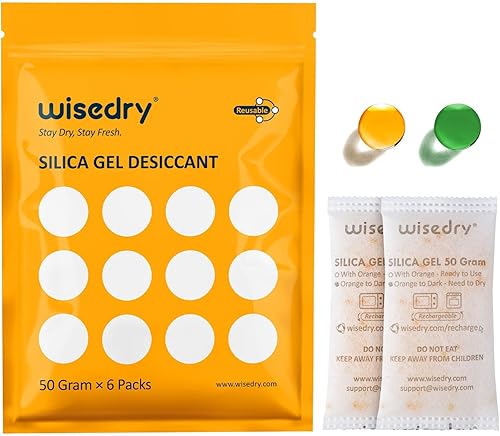
wisedry 6 Silica Gel Packets, 50 g (1.8 oz) (Microwave Rechargeable)
Best for shoe racks, drawers and cameras
- 6 packets, 50 g (1.8 oz) each
- Regenerate in the microwave
- Color indicator
Our verdict, pros and cons
Ready-to-use packets that reactivate in 2 minutes in the microwave. A best seller.
- + Ready to use
- + Reusable for years
- – Not enough capacity for large closets
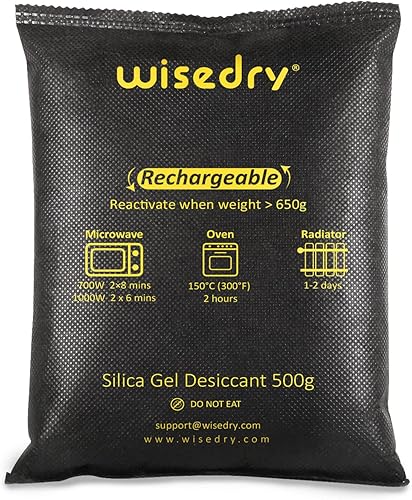
wisedry Rechargeable Car Dehumidifier 2 × 500 g
Best for foggy windshields
- 2 × 500 g
- Microwave reactivated
- Color indicator
Our verdict, pros and cons
Rechargeable silica bags that stop your windshield fogging up; reactivate them in the microwave.
- + Very effective
- + Reusable for years
- – Needs regular recharging in winter
Quick comparison
| Product | Type | Amount | Indicator | Score | Buy |
|---|---|---|---|---|---|
| ⭐ Our top pick FURWEY 100 g ×12 | Silica gel | 12 × 100 g | — | 8.5 | Check price |
| Eva-Dry E-333 | Renewable silica | — | — | 8.6 | Check price |
| Silica gel 5 g ×50 | Silica gel | 50 × 5 g | — | 8.6 | Check price |
| wisedry 0.9 kg | Silica gel | 900 g (2 lb) | — | 8.8 | Check price |
| wisedry 6 × 50 g | Silica gel | 6 × 50 g (1.8 oz) | — | 8.9 | Check price |
| wisedry car 2×500 g | Silica gel | 2 × 500 g | — | 9.0 | Check price |
How much silica gel to use
| Space | Suggested amount |
|---|---|
| Camera bag, jewelry box, small case | 1–2 small packets (5–10 g) |
| Drawer, toolbox, shoe box | 1 pack of 50–100 g |
| Storage bin (15–20 gallons) | 100–200 g |
| Gun safe | 300–500 g, or a cordless rechargeable unit |
| Closet | 500 g–1 kg spread out, or hanging absorbers |
The tighter the seal, the longer it lasts. In an open closet, silica saturates quickly; hanging moisture absorbers or a closet dehumidifier are better there.
How to recharge silica gel, step by step
- Check the indicator. When most beads have changed color, it is time.
- Preheat the oven to about 220–250 °F (105–120 °C). Higher temperatures can damage the fabric pouches and the indicator.
- Spread out the packs or beads on a baking sheet in a single layer.
- Heat for 1–3 hours, until the color returns. Thick packs take longer.
- Let them cool in a sealed container so they do not reabsorb room moisture while cooling.
Silica gel vs. other moisture absorbers
| Silica gel | Calcium chloride bags | Charcoal | |
|---|---|---|---|
| Reusable | Yes, hundreds of times | No | Partly (sun refresh) |
| Leak risk | None | Brine can leak | None |
| Absorbs | Up to about a third of its weight | More than its weight | Little water, lots of odor |
| Best for | Safes, cases, bins, electronics | Closets, bathrooms | Smells |
Smart uses for reusable silica
- Gun safes: prevents rust on firearms and ammo.
- Tool chests: one pack per drawer keeps rust at bay in humid garages.
- Cars: large bags on the dashboard stop a foggy windshield. See our car dehumidifier picks.
- Seed and photo storage: keeps them dry for years.
- Electronics and camera gear: protects lenses from fungus in humid climates.
Want to know if your silica is working? Put a mini hygrometer in the safe or bin: you are aiming for 30–45% in a gun safe and under 50% for most storage. More options in the moisture absorbers category.
Frequently asked questions
How do you recharge silica gel?
Spread the beads on a baking sheet or put the fabric packs on a rack and heat them in the oven at about 220–250 °F (105–120 °C) for 1–3 hours, until the indicator changes back. Some packs are microwave-safe in short bursts; always follow the maker’s instructions and never microwave anything with metal.
How do I know when silica gel is saturated?
Indicating silica changes color: typically orange to green or blue to pink, depending on the product. Non-indicating silica gives no signal, so weigh it when dry and recharge it when it gains roughly 25–30% in weight.
How much silica gel do I need?
As a rough guide, about 1 oz (30 g) per cubic foot of enclosed space in moderately humid conditions. A typical gun safe takes a few hundred grams; a drawer or toolbox a single 50–100 g pack.
Is silica gel toxic?
Plain silica gel is chemically inert and not considered toxic, but it is a choking hazard and the packets say "do not eat" for a reason. Some indicating beads use additives, so keep all of them away from children and pets.
Can silica gel dehumidify a room?
No. Silica is great in small sealed spaces such as safes, cases, drawers and storage bins. A whole room needs an electric dehumidifier.
📚 Sources and references
Official agencies for more information on humidity, mold and indoor air quality.
- A Brief Guide to Mold, Moisture, and Your Home — U.S. Environmental Protection Agency (EPA)
- Mold — U.S. Environmental Protection Agency (EPA)
- WHO guidelines for indoor air quality: dampness and mould — World Health Organization (WHO)